How to Identify High-Alert Medications Requiring Double Checks
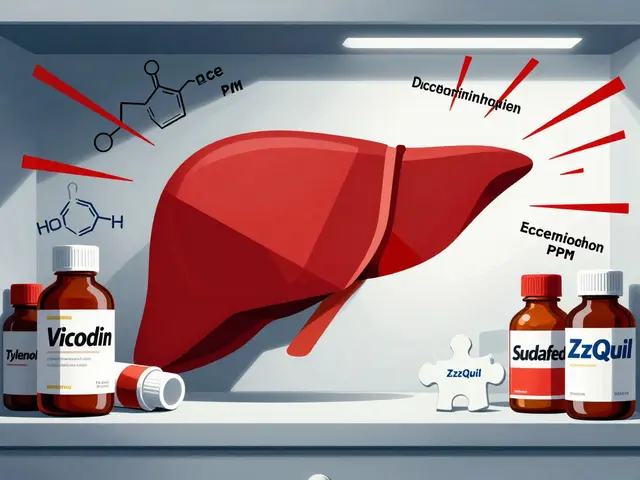
Ever had that sinking feeling after a medication leaves the pharmacy or is administered to a patient, wondering if everything was exactly right? In the fast-paced environment of a hospital or clinic, a tiny slip-a misplaced decimal point or a look-alike vial-can turn a routine dose into a life-threatening event. This is why we categorize certain drugs as "high-alert." These aren't necessarily the drugs that are errored most often, but they are the ones where an error is most likely to cause severe harm or death. To fight this, healthcare systems use independent double checks (IDCs), a safety wall designed to catch mistakes before they reach the patient. But not every drug needs this level of scrutiny, and doing it wrong can actually create a false sense of security.
What Exactly Are High-Alert Medications?
High-alert medications are pharmaceutical agents that carry a significant risk of causing patient harm when used in error. The gold standard for identifying these is the list published by the Institute for Safe Medication Practices (ISMP). Since their first list in 2001, the ISMP has updated these guidelines biennially, with the most recent version released in January 2024.
Why do some drugs get this label while others don't? Usually, it comes down to a few specific risk factors:
- Narrow Therapeutic Index: The difference between a dose that heals and a dose that harms is very small.
- Complex Dosing: Medications that require precise calculations based on weight, surface area, or lab values (like chemotherapy).
- Catastrophic Consequences: If you mess up a vitamin supplement, the patient is fine. If you mess up a neuromuscular blocker, the patient stops breathing.
Common High-Alert Medications That Need a Second Set of Eyes
Different hospitals might have slightly different lists, but most follow the ISMP or VHA frameworks. If you're trying to identify which drugs in your unit need an IDC, look for these common culprits:
| Medication Category | Specific Examples | Primary Risk |
|---|---|---|
| Insulins | IV Insulin infusions, rapid-acting IV pushes | Severe hypoglycemia |
| Anticoagulants | Intravenous Heparin, Argatroban, Bivalirudin | Uncontrolled bleeding |
| Electrolytes (Concentrated) | Potassium Chloride (≥1mEq/ml), Potassium Phosphate | Cardiac arrest |
| Paralytics | Neuromuscular blocking agents | Respiratory failure |
| Chemotherapy | All cytotoxic agents | Systemic toxicity / Organ failure |
Beyond these, many systems like Providence Health also include Total Parenteral Nutrition (TPN) and all IV controlled substances due to the risk of toxicity or diversion.
The Art of the Independent Double Check (IDC)
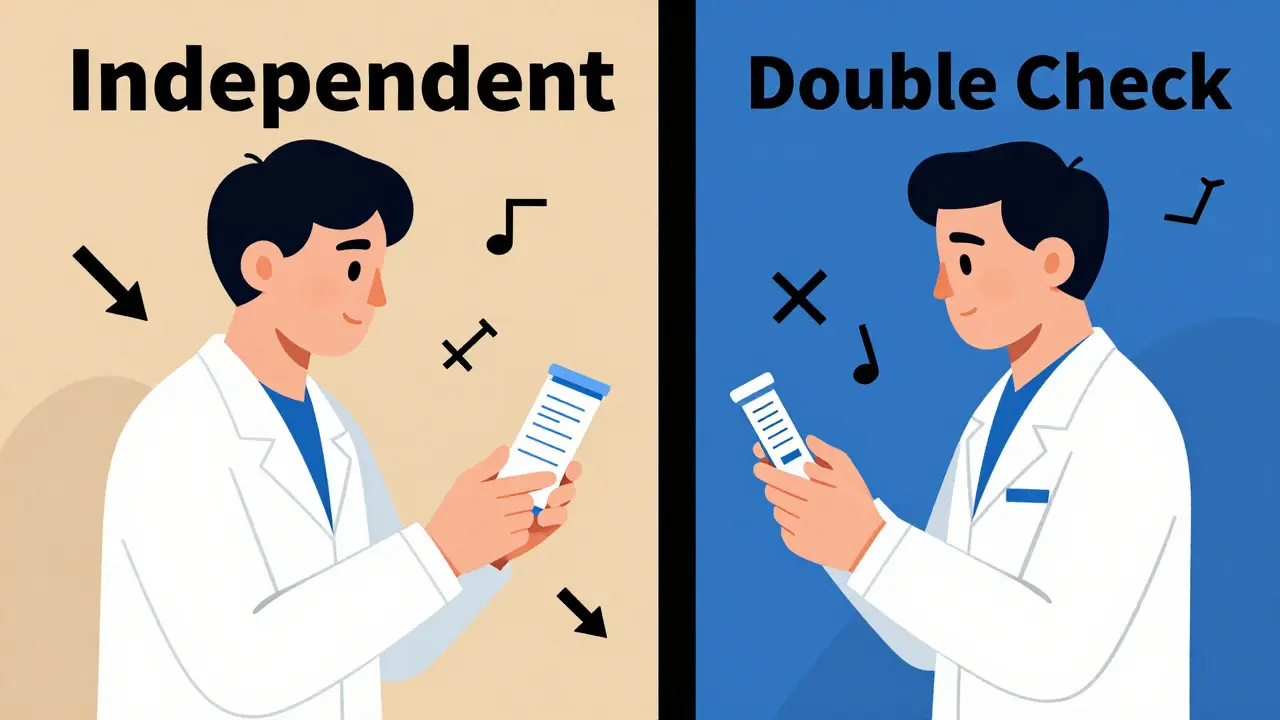
Here is the hard truth: most "double checks" are actually just "simultaneous checks," and they are dangerously ineffective. A simultaneous check is when one nurse says, "I have 5 units of Morphine, right?" and the second nurse just nods and signs the chart. That's not a double check; that's a confirmation bias loop.
A true Independent Double Check means two licensed clinicians work alone and apart from each other. They each verify the order and the medication independently, and only then do they compare their results. According to the ECRI Institute, a properly executed IDC can stop about 95% of errors. If it's done poorly (simultaneously), that effectiveness can plummet to as low as 32% to 40%.
To do it right, you must verify these five critical elements separately:
- Right Patient: Use two identifiers (e.g., name and date of birth).
- Right Medication: Match the drug name exactly to the prescription.
- Right Dose: Recalculate the strength and dosage without looking at the first person's math.
- Right Route: Confirm it's IV, IM, or oral as ordered.
- Right Time: Ensure the frequency and timing align with the patient's plan of care.
Why We Shouldn't Double Check Everything
It sounds counterintuitive, but checking every single drug twice is actually a bad idea. The ISMP and experts like Michael Cohen warn against "double-check fatigue." When clinicians are forced to double-check mundane medications, the process becomes a mindless chore. This is where the "quick sign-off" culture starts, and it actually makes the high-risk checks less reliable.
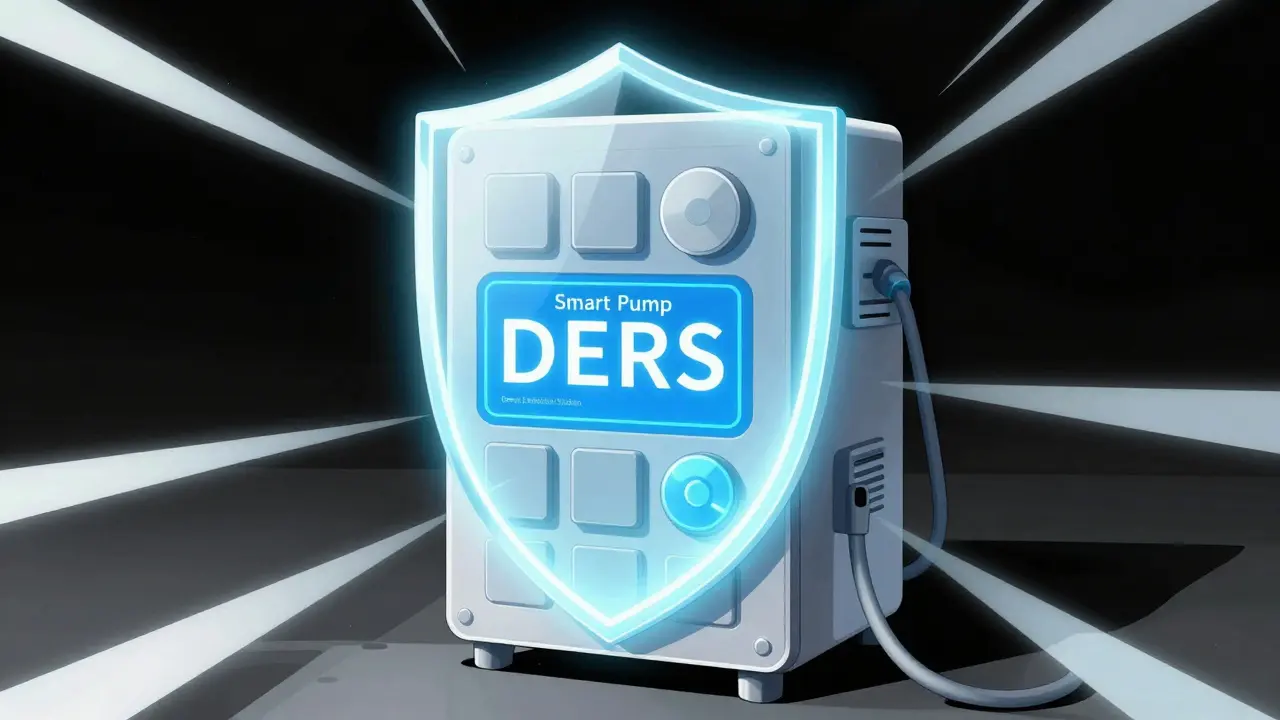
The trend in 2026 is toward risk-stratified verification. Instead of a blanket rule, hospitals are using technology to reduce the burden. For example, Smart Pumps with Dose Error Reduction Systems (DERS) act as a digital safety net. ECRI data shows that combining smart pumps with targeted IDCs for the most dangerous drugs (like IV insulin) reduces errors by 63%, compared to only 42% for those relying purely on manual checks.
Overcoming Real-World Implementation Hurdles
If you're a manager or a lead pharmacist, you know the biggest barrier to IDCs is time. Nurses often report a "lack of available second nurse," especially during emergency resuscitations. This leads to workarounds that compromise patient safety.
How do the best hospitals handle this? They treat the double check as a clinical task, not an interruption. At institutions like Mayo Clinic, the time required for an IDC is actually built into staffing calculations. If you don't account for the 3 minutes it takes to do a proper check, your staff will always feel pressured to skip it.
Other successful strategies include:
- Forcing Functions: Using technology to limit maximum infusion rates so a human error can't physically result in a lethal dose.
- Dedicated Competency Training: Rather than a quick memo, using modules (like those at Cleveland Clinic) that require a passing score on IDC simulation.
- eMAR Integration: Using electronic Medication Administration Records that require two distinct digital signatures before the medication can be charted.
Common Pitfalls to Avoid
Avoid the "halo effect," where a junior nurse trusts a senior nurse's calculation without actually doing the math themselves. The goal isn't to agree with your colleague; the goal is to find a mistake. If you aren't looking for an error, you aren't performing a safety check.
Also, be wary of "confirmation bias." If the first clinician says, "Check this Heparin drip, it's set to 18 units/hr," they have already planted the "correct" answer in the second person's head. The first clinician should simply say, "I need a double check on this Heparin infusion," and let the second clinician find the rate independently.
What is the difference between a double check and an independent double check?
A standard double check often involves one person performing the task while another watches or simply signs off on the result. An independent double check (IDC) requires two clinicians to verify the medication, dose, and settings separately and without communicating their findings until both have completed their individual verification. This prevents the second person from being influenced by the first person's potential mistake.
Which medications always require a double check regardless of the facility?
While policies vary, the ISMP and VHA consistently highlight concentrated electrolytes (like potassium chloride), IV insulin, IV heparin, and chemotherapeutic agents as the highest priority for IDCs due to their potential for catastrophic harm if dosed incorrectly.
Can technology replace the need for a second nurse?
Technology like smart pumps with dose-error reduction systems (DERS) and barcode medication administration (BCMA) significantly reduce errors, but they don't entirely replace the need for human verification for the highest-risk medications. Technology acts as a primary layer of defense, while the IDC serves as the final failsafe.
Why does the ISMP advise against using IDCs for all high-alert drugs?
Overusing IDCs leads to "alert fatigue" and a culture of mindless signing. When everything is a priority, nothing is a priority. By limiting IDCs to only the most dangerous medications and processes, hospitals ensure that clinicians remain vigilant and focused during those critical checks.
How do I document a double check in an eMAR system?
Most modern eMAR systems require a "dual sign-off." This typically involves the primary nurse scanning the patient and medication, and then a second licensed professional entering their unique credentials or scanning their badge to verify the dose and pump settings before the administration is finalized in the record.