
How Second and Third Generic Drugs Drive Down Prescription Prices
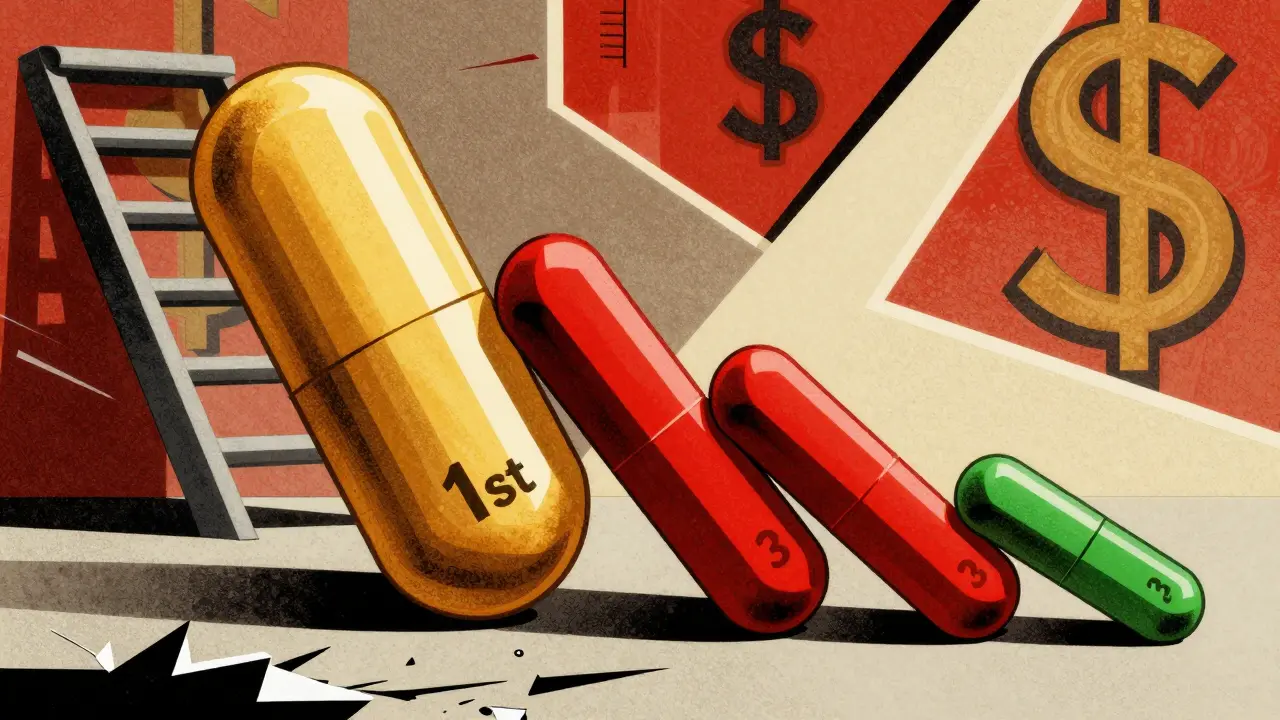
When a brand-name drug loses its patent, the first generic version usually hits the market at about 87% of the original price. That sounds like a big discount-until you realize what happens next. When a second generic enters, prices plunge to around 58% of the brand’s cost. Add a third generic, and you’re looking at just 42%. That’s not a trend. That’s a system designed to save lives by cutting costs.
Why the Second Generic Changes Everything
The first generic isn’t the hero. It’s the opener. It breaks the brand’s monopoly, but it doesn’t always trigger a price war. Many times, that first generic maker has little incentive to slash prices further. Why? Because they’re the only game in town. No competition means they can hold prices steady-or even raise them slightly over time. Enter the second generic. Suddenly, there are two companies selling the exact same medicine. They’re chemically identical. They’re FDA-approved. The only real difference? Price. That’s when the real battle starts. One company lowers its price to win shelf space. The other responds. Wholesalers and pharmacies start favoring the cheaper option. Within months, the average price drops by more than a third from the first generic’s level. This isn’t theory. It’s data. The FDA tracked 2,400 generic drugs approved between 2018 and 2020. Their analysis showed that the jump from one to two generic manufacturers reduced prices by 36%. That’s $100 off a $300 drug. For a patient paying out of pocket, that’s a month’s supply suddenly becoming affordable.The Third Generic Is Where the Real Savings Kick In
Most people think the first generic is the big win. But the biggest savings come from the third entrant. That’s when the market flips from a duopoly to a true auction. Three manufacturers are now fighting for the same business. Each one knows that if they don’t undercut the others, they’ll lose contracts with big pharmacy chains and PBMs (pharmacy benefit managers) who control most of the prescription flow. The numbers don’t lie. With three generics, prices fall to 42% of the original brand price. That’s a 58% drop from the first generic’s price. For a drug that used to cost $500 a month, it’s now $210. For chronic conditions like high blood pressure or diabetes, that’s the difference between taking your meds or skipping doses. A 2021 analysis by the Assistant Secretary for Planning and Evaluation (ASPE) found that markets with three or more generic competitors saw price reductions of about 20% within three years-just from having that third player in the game. And when you get to five or more manufacturers, prices often fall 70-80% below the brand’s original cost.What Happens When There’s No Third Generic?
Here’s the dark side: nearly half of all generic drug markets never get past two manufacturers. That’s not by accident. Sometimes, it’s because manufacturing is too complex or too cheap to bother with. Other times, it’s because big players buy up smaller ones. Teva swallowed Allergan’s generic division. Viatris was born from the merger of Mylan and Upjohn. Fewer companies mean less competition. When only two companies are selling a drug, prices don’t just stall-they can spike. A 2017 University of Florida study found that when a market went from three generics down to two, prices jumped 100% to 300% in some cases. That’s not a glitch. That’s market failure. One company raises prices. The other follows. No one has to win the race anymore. They just have to agree not to undercut each other. That’s why the number of competitors matters more than the number of brands. It’s not about having options. It’s about having enough options to force real price pressure.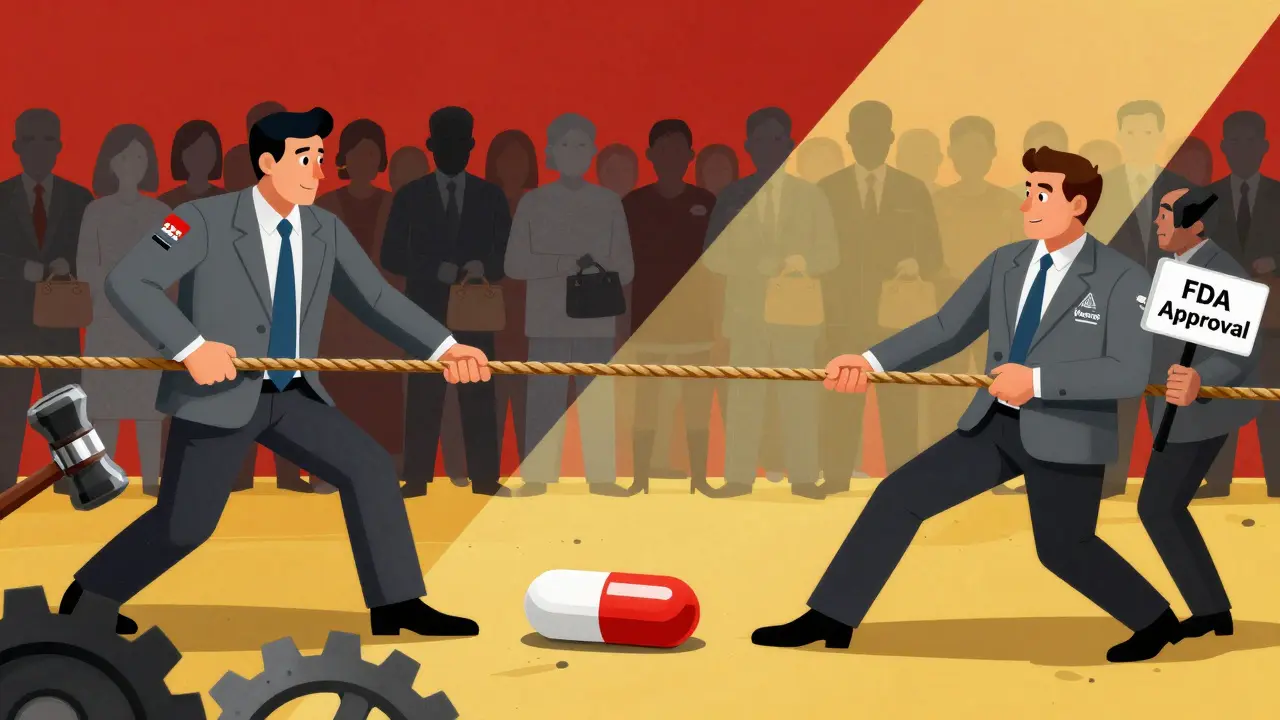
Who’s Really in Control?
You’d think more generics means lower prices for patients. But the system is rigged in other ways. The real power doesn’t lie with manufacturers. It lies with three giant wholesalers-McKesson, AmerisourceBergen, and Cardinal Health-who control 85% of the market. And three PBMs-Express Scripts, CVS Health, and Optum-handle 80% of prescriptions. These middlemen negotiate bulk discounts. But they don’t always pass the savings to you. They take a cut. And if there are only two generic makers, they can play them against each other and still pay more than they should. Only when there are five or more manufacturers do PBMs have real leverage to drive prices down. Even worse, brand-name companies sometimes pay generic makers to stay off the market. These “pay-for-delay” deals cost patients $3 billion a year in extra out-of-pocket costs, according to the Blue Cross Blue Shield Association. A 2002 drug with 75 patents stretched its monopoly from 2016 to 2034. That’s not innovation. That’s legal obstruction.Why This Matters for Real People
Imagine you’re on a medication that costs $400 a month. You’re on Medicare. Your copay is $30. But if a third generic enters and the price drops to $170, your copay might drop to $15-or even $10, depending on your plan. That’s $240 a year saved. For someone living on a fixed income, that’s groceries, gas, or heating. The FDA estimates that the 2,400 generics approved between 2018 and 2020 saved consumers $265 billion. That’s not a number on a chart. That’s millions of people who didn’t have to choose between medicine and rent. The same goes for chronic conditions. A diabetic on insulin? A heart patient on statins? A cancer survivor on maintenance drugs? These aren’t luxury medications. They’re life-sustaining. And without multiple generic competitors, many of them would still cost hundreds of dollars a month.
What’s Being Done to Fix This?
There are signs of progress. The CREATES Act, passed in 2022, stops brand companies from blocking generic makers from getting samples they need to prove their drug works. That’s a big deal-some brands were hoarding samples to delay competition. The FDA’s GDUFA III program (2023-2027) is speeding up approvals for complex generics, which used to take years to enter the market. These are drugs like inhalers or injectables that are harder to copy. More competition there means more savings where they’re needed most. Bipartisan bills like the Preserve Access to Affordable Generics and Biosimilars Act aim to ban pay-for-delay deals outright. If passed, they could save $45 billion over ten years. But the simplest fix? Encourage more manufacturers to enter the market. The more competitors, the faster prices fall. The FDA’s own data proves it: every additional generic lowers prices. There’s no magic formula. Just more players.What You Can Do
You can’t control who makes the drugs. But you can control what you ask for. When your pharmacist gives you a generic, ask: “Is there another version available?” If they say no, ask why. If your insurance only covers one generic, call them. Ask if they can switch to a cheaper one. Talk to your doctor. Ask if there’s a generic version with more competition. If your drug has only one or two makers, you’re not getting the full benefit of the system. There’s a better option out there-if you know to look for it.What’s Next?
The trend is clear: more generics = lower prices. But the system is under pressure. Consolidation among manufacturers and middlemen threatens to reverse progress. Without policy changes, the savings from second and third generics could shrink. The Congressional Budget Office warns that without action, Medicare could lose $25 billion a year by 2030 to inflated generic prices. The good news? The mechanism works. We’ve seen it. We’ve measured it. We’ve saved billions because of it. The question isn’t whether additional generic competition lowers prices. It’s whether we’ll let the system keep working-or let it be choked by greed and consolidation.Why do generic drug prices keep dropping after the first one enters?
Because each new generic manufacturer has to undercut the others to win contracts with pharmacies and insurers. The first generic may still charge close to the brand price, but the second and third have to compete aggressively to survive. That’s what drives prices down-often to 40% or less of the original cost.
Does having more generic manufacturers always mean lower prices?
Usually, yes-but only if there are at least three. Markets with just two manufacturers often see prices rise instead of fall, because the two companies can effectively collude without fear of being undercut. Three or more creates real competition. Ten or more can slash prices by 70-80%.
Why don’t more companies make generic drugs if it’s so profitable?
It’s not always profitable. Manufacturing generics requires FDA approval, which can cost millions. For complex drugs like inhalers or injectables, the cost is even higher. Plus, big manufacturers like Teva and Viatris have bought up smaller players, reducing competition. Many companies just don’t see enough profit margin to risk the investment.
What are "pay-for-delay" deals and how do they affect prices?
These are secret agreements where brand-name drug companies pay generic manufacturers to delay entering the market. This keeps prices high and blocks competition. The Blue Cross Blue Shield Association estimates these deals cost patients $3 billion a year in extra out-of-pocket costs.
How can I find out if my generic drug has multiple manufacturers?
Check your prescription label-it often lists the manufacturer. Or ask your pharmacist: "Is there another generic version of this drug available?" You can also search the FDA’s Green Book online, which lists all approved generics and their manufacturers. If only one or two are listed, you’re missing out on potential savings.


This whole post is a neoliberal fairy tale wrapped in FDA data. The real reason prices drop isn't competition-it's that generics are made in factories where workers earn $2 a day and safety protocols are suggestions. The 'savings' are just cost-shifting onto the global poor. You call it life-saving? I call it exploitation with a spreadsheet.
While the data presented is compelling and well-documented, I believe it is essential to acknowledge the broader ethical implications of pharmaceutical pricing structures. The reduction in cost, though statistically significant, must be weighed against the sustainability of manufacturing practices and the equitable access to essential medicines worldwide. A truly just system would ensure not only affordability but also dignity in production.
Have you ever wondered why the FDA approves so many generics at once? It’s not about competition-it’s a cover. The same private equity firms that own the brand-name companies also own the generic manufacturers. They let two or three in to create the illusion of choice, then quietly raise prices when the public isn’t looking. The third generic? A puppet. The real players are in boardrooms in Delaware and Cayman Islands.
This is such an important conversation-and the numbers are undeniable. The jump from one to three generics isn’t just a statistical blip, it’s a lifeline. I’ve seen friends choose between insulin and groceries because the first generic was still too expensive. When the third one arrived? They cried. Not because it was cheap, but because they could finally breathe. This isn’t economics-it’s survival. Let’s keep pushing for more manufacturers, not fewer.
It is, indeed, a remarkable phenomenon-the cascading reduction in price with each additional generic entrant-and yet, one cannot help but reflect upon the underlying structural fragility of this system: it relies entirely on the presence of multiple actors, each acting in self-interest, to produce a collective good. But what happens when consolidation, regulatory capture, or financial manipulation suppresses those actors? The market, left to its own devices, does not guarantee justice-it only guarantees efficiency, and sometimes, efficiency is a cruel master.
Bro, this is why India’s pharma sector is the unsung hero of global health. We make generics cheaper than you can imagine-because we’re not playing Wall Street games. Your $400 drug? We make it for $5. You think it’s magic? Nah. It’s just not being robbed by middlemen. If you want real savings, support global generics-not just the ones that pass FDA paperwork.
My mom’s blood pressure med dropped from $120 to $18 after the third generic hit. She cried. I cried. This isn’t theory-it’s real life. If your pharmacist says there’s only one option, ask again. And again. Your life is worth the extra call.
One must consider not merely the economic mechanics of market entry but the philosophical implications of commodifying human health: when the value of a life-saving drug is reduced to a function of competitor count, we have entered a realm where the sanctity of care is subordinated to the logic of the marketplace. The fact that we celebrate a 58% price drop as a triumph reveals a deeper pathology-that we have come to accept the baseline of profiteering as normal, and only the slight alleviation of it as progress. What kind of society measures moral worth in percentages off a prescription bottle?