
How to Switch Back from a Generic to a Brand Medication Safely
Switching from a generic medication back to its brand-name version isn’t as simple as asking your pharmacist for the original. It’s a medical decision that requires clear evidence, proper documentation, and often, a battle with insurance. Many people assume generics and brand drugs are identical - and for most, they are. But for some, even tiny differences in inactive ingredients can cause real problems. If you’ve had a bad reaction, noticed your condition worsening, or simply feel off after switching, you’re not imagining it. There’s a safe, step-by-step way to get back to what works - if you know how to ask for it.
Why You Might Need to Switch Back
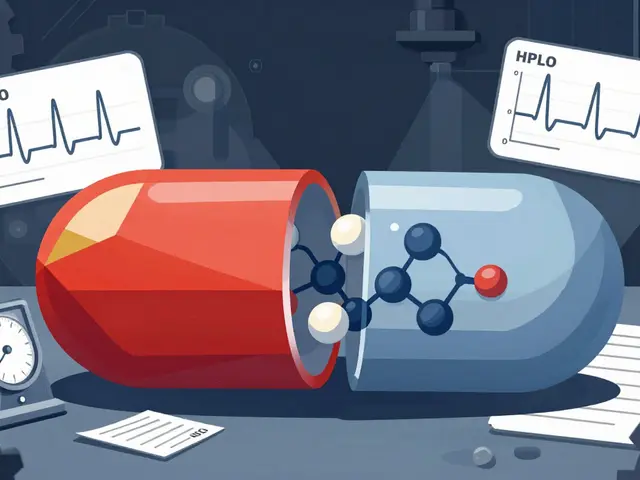
Generic drugs are required by the FDA to have the same active ingredient, strength, and dosage form as the brand-name version. They must also be bioequivalent - meaning they deliver the same amount of medicine into your bloodstream within a specific range (80% to 125% of the brand). That sounds perfect. But here’s what’s not always said: inactive ingredients can vary. These include dyes, fillers, preservatives, and coatings. For most people, they’re harmless. But if you’re sensitive to cornstarch, lactose, or a specific dye like FD&C Red No. 40, you might develop a rash, stomach upset, or even a drop in medication effectiveness. This isn’t rare. A 2022 FDA analysis found that 14.3% of medication-related adverse events involved switching between generic and brand versions - often because the patient didn’t realize the change happened. Some conditions are especially sensitive. Warfarin (a blood thinner), levothyroxine (for thyroid function), and anti-seizure drugs like phenytoin are narrow therapeutic index medications. That means even small changes in how much medicine reaches your bloodstream can cause serious side effects - like a stroke, uncontrolled seizures, or thyroid crash. If you’re on one of these, switching back to the brand might not just be a preference - it could be necessary.What the Data Says About Switching Back
Studies show that switching from brand to generic works for 92.7% of patients. But switching back? Only 84.3% of those cases go smoothly. Why? Because once you’ve been on a generic, your body may have adapted to its specific formulation. Switching again - even back to the original brand - can throw off your balance. Cost is another big factor. Brand-name drugs cost 3 to 5 times more than generics. For example, a month of brand-name Synthroid (levothyroxine) runs about $450. The generic? Around $112. Insurance companies know this. They often deny coverage for brand-name drugs unless you prove the generic didn’t work. In 2023, Medicare Part D plans required prior authorization for 68% of brand-name drugs when a generic was available. And it’s not just cost. A 2023 survey of over 1,200 patients who tried switching back found that 41.7% were turned away at the pharmacy because the pharmacist didn’t have the right paperwork. Another 28.3% had their medication delayed by days - or even weeks - while insurance reviewed their request.The 7-Step Safe Switching Process
You can’t just walk into the pharmacy and say, “I want the brand.” You need to build a case. Here’s how to do it right:- Document the problem. Don’t say “I feel worse.” Write down specifics: “My INR levels fluctuated between 2.8 and 5.1 over 6 weeks while on generic warfarin, despite stable dosing.” Or: “I developed a persistent rash after switching to generic levothyroxine that cleared within 48 hours of switching back to Synthroid.”
- Get lab results. Blood tests, thyroid levels, INR readings - these are your proof. Attach copies to your request. Numbers don’t lie.
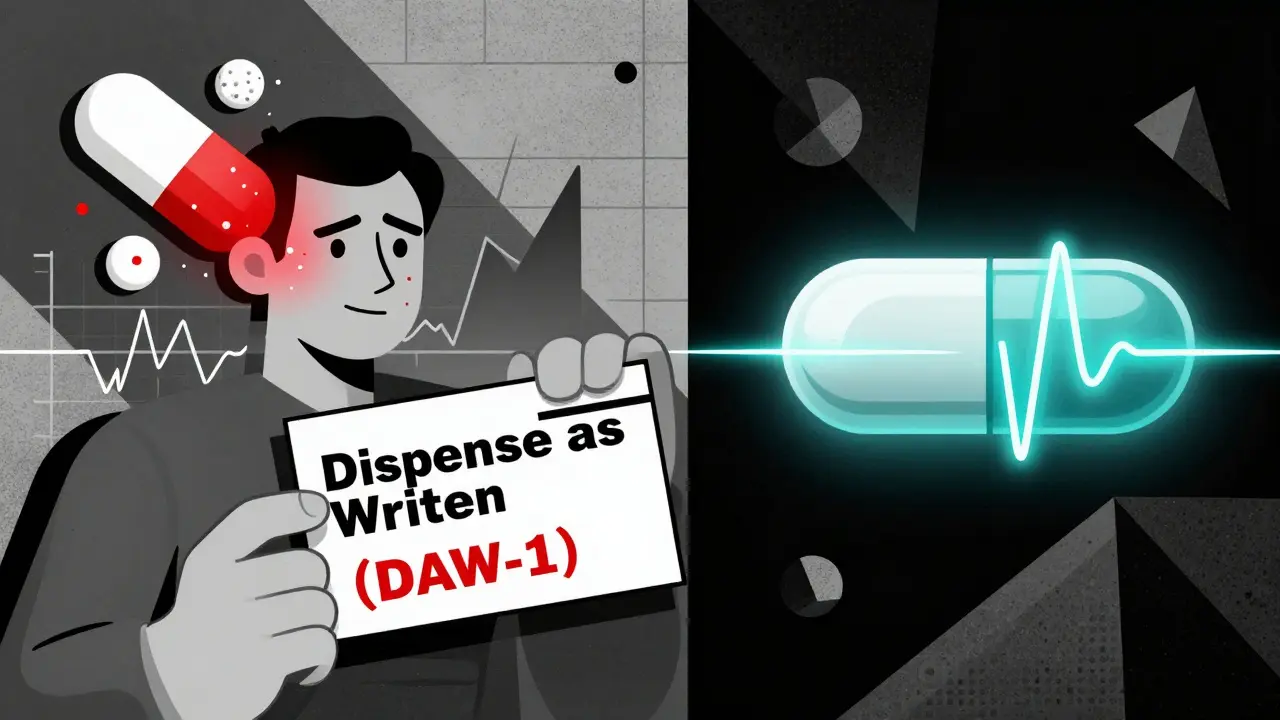
- Ask your doctor to write “Dispense as Written” (DAW-1) on the prescription. This code tells the pharmacy: “Do not substitute. This is medically necessary.”
- Specify the exact brand name. Don’t say “the brand.” Say “Synthroid 50 mcg tablets.” Some generics are made by the same company as the brand (called authorized generics), and your doctor needs to rule those out if they didn’t work.
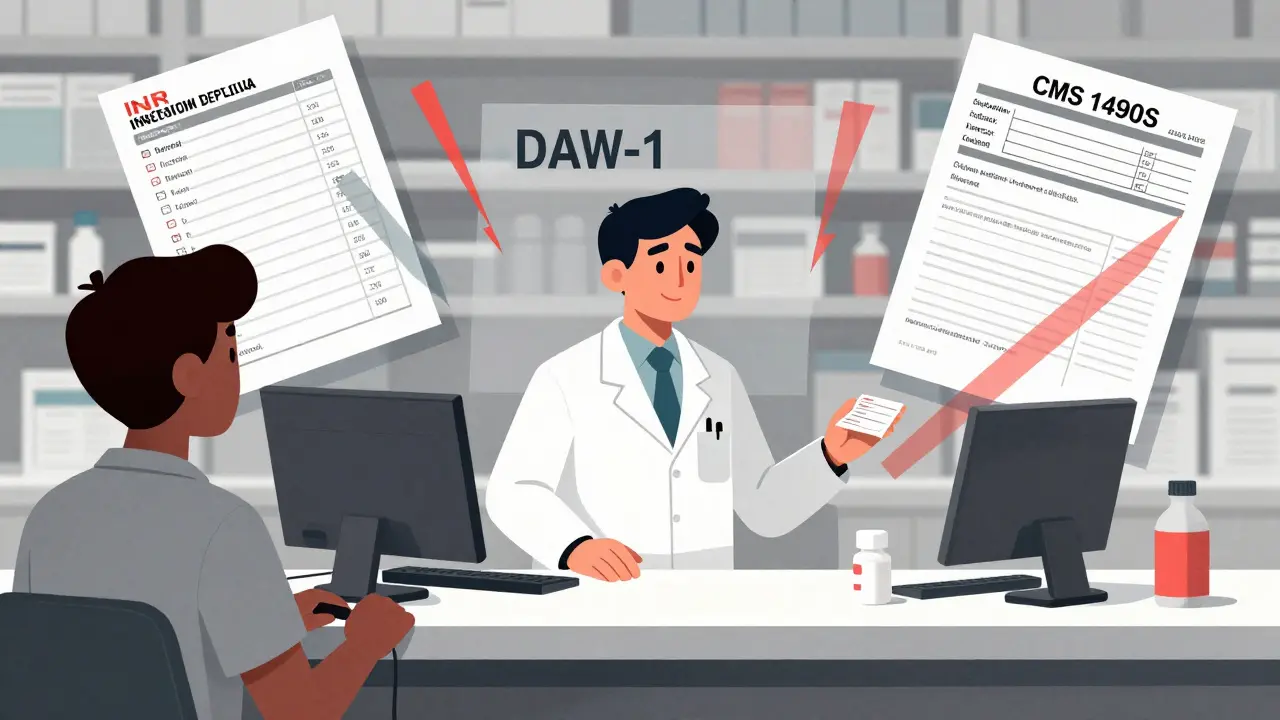
- Complete the “Brand Medically Necessary” form. Many insurers require this. It’s often CMS Form 1490S. Your doctor’s office should have it. If not, call the insurance company and ask for the correct form.
- Initiate monitoring. If you’re on a narrow therapeutic index drug, your doctor should schedule a follow-up blood test within 7-10 days after the switch.
- Follow up. Don’t assume it’s done. Call the pharmacy after 2 days to make sure they filled it. If they didn’t, ask for the reason. Was it insurance? A form issue? A stock problem?
Insurance Hurdles and How to Beat Them
The biggest roadblock isn’t your doctor - it’s your insurance. Blue Cross Blue Shield denied brand-name requests in 82% of cases according to patient reports. Medicare Part D takes an average of 14.3 days to process prior authorizations. But here’s the key: 63.7% of denials are overturned when you appeal with proper documentation. That means if you’ve got lab results, clinical notes, and the DAW-1 code, you have a very good chance. Start by calling your insurance’s member services. Ask: “What is the process for a prior authorization for brand-name medication due to therapeutic failure with generic?” Write down the name of the rep, the date, and what they said. Then, have your doctor submit the appeal. Include:- Lab results showing instability
- Timeline of symptoms
- Previous successful use of the brand
- Any adverse reactions to the generic
When Switching Back Is Risky - And When It’s Not
Not every situation calls for a switch back. The American Pharmacists Association warns against switching back for anti-epileptic drugs. A 2022 study found a 27% higher rate of breakthrough seizures in patients who switched between different generic or brand versions of these drugs. For most medications - like statins, blood pressure pills, or antibiotics - switching back offers no clinical benefit. It’s just more expensive. If you’re feeling fine on the generic, don’t push for the brand. But if you’ve had:- Unexplained side effects (rash, nausea, dizziness)
- Worsening of your condition
- Lab values that suddenly went off track
- History of organ transplant, epilepsy, or thyroid disease
What to Do If Your Pharmacy Refuses
Sometimes, the pharmacy won’t fill the brand even with a DAW-1 code. They might say they don’t carry it, or it’s “too expensive to stock.” Here’s what to do:- Ask them to order it. Most pharmacies can get it in 24-48 hours.
- If they say no, ask for the name of another pharmacy that carries it. Chain pharmacies like CVS or Walgreens usually do.
- Call your doctor’s office. They can fax a new prescription to a different pharmacy.
- If you’re in a rural area and no nearby pharmacy carries it, ask about mail-order options through your insurer.
What’s Changing in 2026
New rules are coming. Starting in 2024, Medicare Part D introduced a new “Medically Necessary Brand Exception” pathway with a 72-hour processing guarantee for certain drugs. That means if your doctor submits the paperwork correctly, you shouldn’t wait more than 3 days. The FDA is also requiring manufacturers to list inactive ingredients more clearly on packaging - something that’s been missing for decades. This will help patients and doctors spot potential allergens. And more states are passing laws that require pharmacists to notify the prescriber if a patient has an adverse reaction to a generic. In 17 states, this is now mandatory.Final Thoughts: It’s Not About Preference - It’s About Control
Switching back to a brand-name medication isn’t about being picky. It’s about control over your health. For some people, the difference between a generic and a brand isn’t theoretical - it’s a rash, a seizure, a stroke, or a thyroid crash. The system isn’t perfect. Insurance delays, pharmacy refusals, and confusing rules make it harder than it should be. But if you’ve got clear clinical reasons - documented, measured, and communicated - you have the right to get what works. Don’t accept “it’s the same.” If you feel different, you are different. And there’s a path - a real, proven path - to get back to the medication that keeps you well.Can I just ask my pharmacist to give me the brand instead of the generic?
No. Pharmacists are legally allowed to substitute generics unless the prescription says “Dispense as Written” (DAW-1) or the drug is on a state’s restricted list. Even if you ask, they’ll fill the generic unless your doctor has specifically required the brand with proper documentation.
Are brand-name drugs really better than generics?
For most people, no. The FDA requires generics to be bioequivalent to brand drugs. But for a small group - especially those on narrow therapeutic index medications like warfarin or levothyroxine - differences in inactive ingredients can affect how the drug is absorbed. If you’ve had a reaction or your condition worsened on the generic, the brand may be clinically better for you.
How long does it take to get insurance approval to switch back?
It varies. Without proper documentation, it can take weeks. With a completed “Brand Medically Necessary” form, lab results, and a DAW-1 code, Medicare Part D and most private insurers now process requests in 72 hours or less under new 2024 rules. Always follow up with your pharmacy and insurer if you haven’t received the medication within 5 business days.
What if my doctor won’t write the prescription for the brand?
Ask why. If they say it’s not necessary, request a second opinion. If they say you don’t have proof, gather your lab results and symptom logs. If they still refuse, consider switching to a provider who understands the risks of switching back for narrow therapeutic index drugs. Your health is worth it.
Can I switch back without telling my doctor?
No. Medication changes - especially switching between brand and generic - should always be done under medical supervision. Doing it on your own can lead to dangerous side effects, especially with drugs like blood thinners or seizure medications. Your doctor needs to monitor you during the transition.


Man i never thought about how dyes in generics could mess with you till i got a rash after switching to the generic version of my blood pressure med. turned out i was allergic to FD&C Red No. 40. my doc was like ‘huh, weird’ but i had the proof. now i just ask for the brand and they don’t argue anymore. if you feel off after a switch, don’t brush it off. it’s not ‘all in your head’.
Let me be perfectly clear: the FDA does not guarantee identical absorption rates between generics and brands-only bioequivalence within a 20% margin. That’s not ‘close enough.’ That’s a gamble with your life when you’re on warfarin or levothyroxine. And insurance companies? They treat your health like a spreadsheet. They deny, delay, and demand paperwork-then act shocked when you’re in the ER. This isn’t about preference. It’s about survival.
I’ve been on levothyroxine for 12 years. Switched to generic in 2021-felt foggy, gained weight, got cold all the time. Went back to Synthroid after my TSH spiked to 8.7. My endocrinologist said, ‘I’ve seen this a dozen times.’ It’s not just placebo. There’s real biology here. The key is documentation. Lab numbers. Symptom logs. And insisting on DAW-1. Don’t let anyone tell you it’s ‘the same.’
My mom had a stroke after switching to a generic blood thinner. She was fine for months on brand, then the pharmacy switched her without telling us. INR went from 2.4 to 5.1 in two weeks. She didn’t know until she collapsed. Now I fight for every prescription. I’ve learned to print out the FDA’s inactive ingredient list and bring it to every appointment. It’s exhausting. But if you’ve been there-you know it’s worth it.
Okay so let me get this straight-you’re telling me some people can’t handle cornstarch in their meds? Like…what? Are we saying generics are unsafe for people with allergies? That’s…kinda obvious. And you’re making a whole 7-step process for this? I mean, can’t you just say ‘I’m allergic to X’ and get the brand? Why is this so complicated? Insurance is just being greedy, not mysterious.
It is with profound respect for patient autonomy and clinical integrity that I acknowledge the systemic barriers preventing access to therapeutically appropriate medications. The current reimbursement paradigms, while fiscally prudent, often fail to account for individual physiological variance. I commend the author for elucidating the DAW-1 protocol and the necessity of laboratory validation. Such measures are not merely procedural-they are ethically imperative. I urge all clinicians to advocate unreservedly for their patients' right to the most effective therapeutic option, regardless of cost.
in india we dont even have brand vs generic drama. most people just take what pharmacy gives. but i read this and thought-maybe we should start tracking inactive ingredients too. my cousin had seizures after switching generic epilepsy med. no one knew why. now i keep a list of every med’s fillers. simple, but helpful.
so you’re saying if you’re rich you get the brand and if you’re poor you get the generic and if you’re unlucky you get a rash or a stroke? wow. just wow. and you want us to believe this isn’t a scam? the system is rigged. i hope you all get your Synthroid. i hope you all get your DAW-1. i hope you all have doctors who care. i hope. but i don’t believe in hope anymore.
wait so if i switch back to brand and feel better, does that mean the generic was bad? or did my body just get used to the generic and now the brand feels weird? i’m confused. is this like switching from coffee to tea and thinking tea tastes worse because you’re used to caffeine? or is it actually different?