Warfarin and Antibiotics: Managing INR Spikes and Bleeding Risks
Warfarin & Antibiotic Interaction Checker
Enter your baseline INR and select an antibiotic to see the estimated impact.
If you take Warfarin is a vitamin K antagonist anticoagulant used to prevent blood clots and strokes, a simple course of antibiotics for a sinus infection or a UTI can suddenly become a dangerous situation. It isn't just about the medicine you're taking; it's about how your body processes it. When you add an antibiotic to the mix, your Warfarin and Antibiotics interaction can send your blood's clotting time soaring, putting you at a serious risk for internal bleeding.
The Quick Guide to Warfarin and Antibiotics
- High-Risk Antibiotics: Fluoroquinolones, Sulfonamides, and most Macrolides (except azithromycin).
- Low-Risk Antibiotics: Most Penicillins and Cephalosporins.
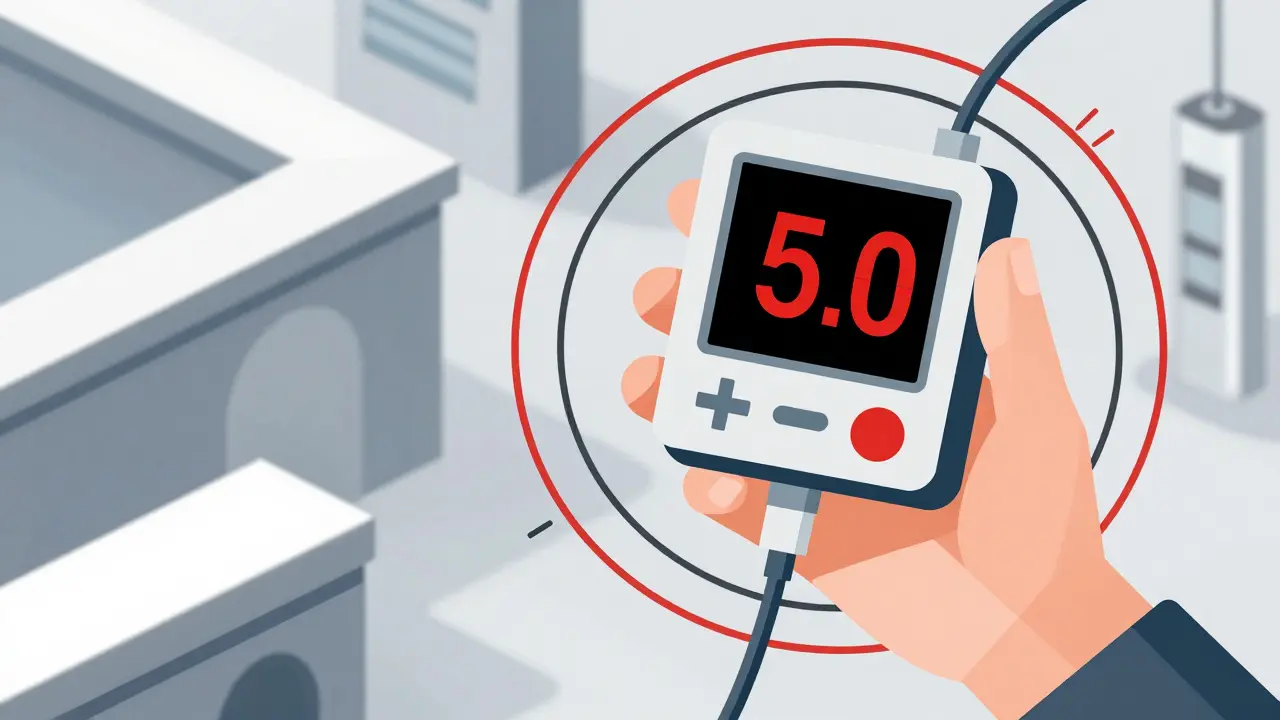
- The Danger Zone: An INR value ≥5.0 indicates excessive thinning and high bleeding risk.
- The Window: INR spikes typically peak between 3 and 10 days after starting antibiotics.
- Action Plan: Request an INR test 3-5 days after starting any new antibiotic.
Why Antibiotics Mess with Your Clotting Time
To understand why this happens, we have to look at the International Normalized Ratio (or INR, a standardized measurement of how long it takes your blood to clot). Most people on warfarin aim for a therapeutic range of 2.0 to 3.0. When that number climbs, your blood becomes too thin.
Antibiotics trigger this spike through three main pathways. First, they attack the "good" bacteria in your gut. These bacteria are actually tiny factories that produce about 10-15% of your daily vitamin K. Since warfarin works by blocking vitamin K, killing those bacteria removes a natural brake on the drug, making the warfarin much more powerful. This effect usually kicks in within 3 to 7 days.
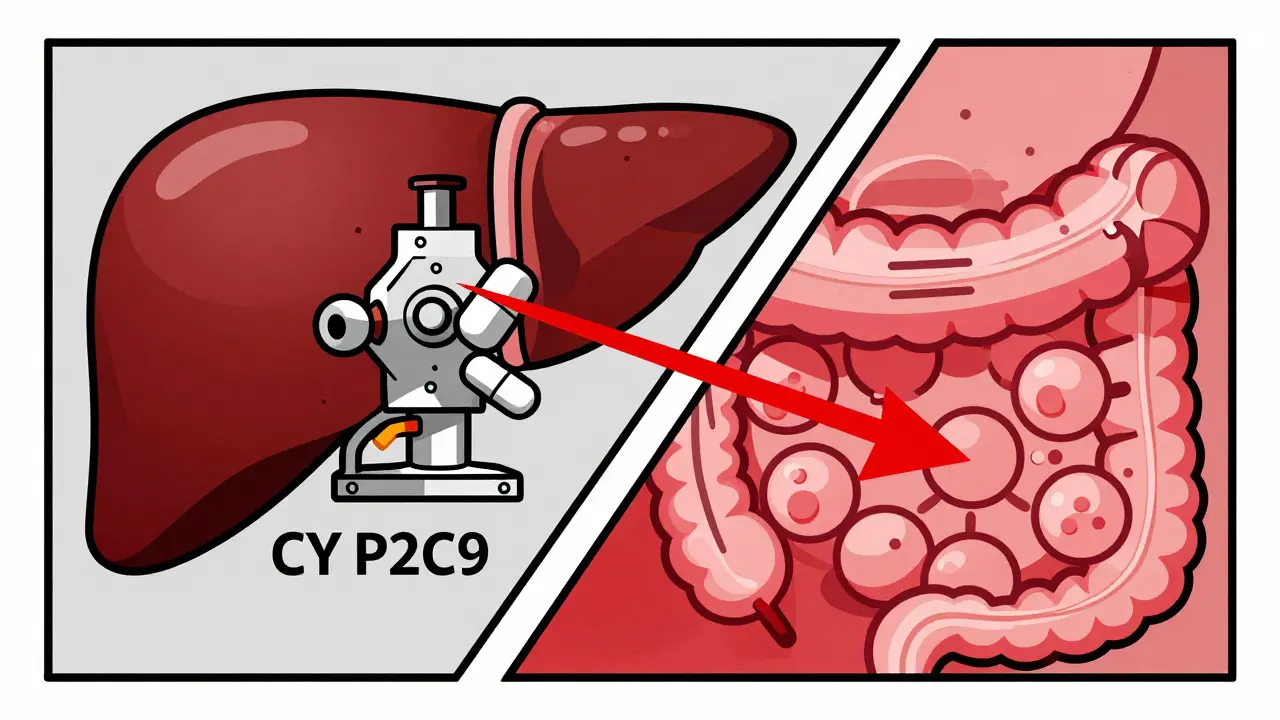
Second, many antibiotics interfere with the Cytochrome P450 enzyme system, specifically the CYP2C9 enzyme which is responsible for breaking down warfarin in the liver. If the antibiotic blocks this enzyme, warfarin piles up in your bloodstream instead of being cleared out. For example, some inhibitors can stretch warfarin's half-life from 40 hours to over 60 hours.
Third, some drugs, like sulfonamides, compete for the same "parking spots" on albumin proteins in your blood. Since warfarin is 99% bound to these proteins, any drug that pushes it off increases the amount of "free" warfarin circulating, which immediately boosts the drug's effect.
Breaking Down the Antibiotic Classes
Not all antibiotics are created equal. Some are practically invisible to warfarin, while others are like throwing gasoline on a fire. Knowing which is which can save you a trip to the emergency room.
| Antibiotic Class | Example Drugs | INR Impact | Risk Level |
|---|---|---|---|
| Fluoroquinolones | Ciprofloxacin, Levofloxacin | Significant increase (2.1-4.3 points) | High |
| Sulfonamides | Trimethoprim-sulfamethoxazole | Moderate to High (1.2-3.0 points) | High |
| Macrolides | Clarithromycin (Strong), Azithromycin (Mild) | Varies (Strong inhibitors = 1.8-2.5 point rise) | Moderate |
| Nitroimidazoles | Metronidazole | Moderate increase (1.5-2.8 points) | Moderate |
| Penicillins | Amoxicillin, Ampicillin | Minimal change (<0.5 points) | Low |
Take Clarithromycin as an example. It is a strong CYP3A4 inhibitor and can cause an INR jump in about 34% of patients. Contrast that with Azithromycin, which has minimal effect on liver enzymes; 98% of patients see no significant change in their INR. This is why your doctor might choose one "Z-Pak" over another based on your medications.
Who is Most at Risk?
While anyone on warfarin can have a reaction, some people are more prone to dangerous spikes. Research from the University of Minnesota involving over 13,000 patients found a few key red flags. Women tend to have a higher risk of reaching an INR of 5.0 or higher compared to men. People fighting cancer are also more vulnerable, likely due to overall frailty and other medications.
Your baseline health also plays a huge role. If your INR is already hovering at the high end of your target (say, 2.8 or 3.0) before you start an antibiotic, you have much less "buffer room." A small bump from a drug interaction could push you straight into the danger zone. Age is another factor; those over 75 often have slower liver metabolism, meaning the drug stays in the system longer.
The "Unidirectional Effect" and the Danger of Stopping
Here is the part most people miss: the danger doesn't end when you finish your antibiotics. There is a phenomenon called the unidirectional effect. When you stop taking a drug that was blocking your liver enzymes, your liver suddenly starts processing warfarin at full speed again.
If your doctor lowered your warfarin dose to compensate for the antibiotic, and you keep that lower dose after the antibiotic is gone, your INR can crash. We've seen cases where patients drop from a safe 2.5 down to 1.1 within just four days of finishing a course of Ciprofloxacin. This puts you right back in the danger zone for strokes and blood clots, even though you're still taking your medication.
How to Safely Navigate Antibiotic Treatment
You don't have to avoid antibiotics, but you do have to be proactive. The biggest mistake is "waiting and seeing." By the time you notice a bruise or a nosebleed, your INR might already be at 7.0 or 10.0.
The gold standard for monitoring is to check your INR 3 to 5 days after starting a high-risk antibiotic. If you are in a high-risk group-elderly, battling cancer, or unstable baseline-some specialists even recommend daily monitoring using home point-of-care devices. These new smartphone-connected monitors allow you to catch a spike on day 3 and adjust your dose on day 4, rather than finding out a week later during a routine clinic visit.
In terms of dosing, don't be surprised if your doctor preemptively cuts your warfarin dose by 10% to 30% the moment you start a high-risk antibiotic. This is an anticipatory move to prevent the spike before it happens. Once the antibiotics are finished, expect a gradual increase back to your baseline dose, usually about 15-20% higher than the "antibiotic dose."
Warning Signs You Shouldn't Ignore
Even with monitoring, you need to know the signs of "over-anticoagulation." If you notice any of the following while on antibiotics, call your clinic immediately:
- Unexplained bruising (large purple spots without a known injury).
- Gums that bleed excessively when brushing teeth.
- Nosebleeds that won't stop within 10 minutes.
- Dark, tea-colored urine or black, tarry stools.
- Severe headaches or sudden dizziness (which could signal internal bleeding).
Do all antibiotics increase my INR?
No, not all of them. Penicillins and cephalosporins generally have a very low impact. However, fluoroquinolones and sulfonamides are notorious for causing significant spikes. Always tell your prescribing doctor that you are on warfarin so they can choose the safest option or plan for extra monitoring.
How quickly can antibiotics affect my blood thinning?
It depends on the mechanism. Protein-binding displacement happens almost immediately. Liver enzyme inhibition usually takes a few days to manifest. Gut flora changes typically peak between 3 and 10 days. This is why testing at the 3-5 day mark is critical.
Can I take Vitamin K supplements to counter the effect?
You should never self-medicate with Vitamin K or change your warfarin dose without a doctor's order. Over-correcting can lead to a blood clot or stroke. Vitamin K is used clinically to reverse warfarin toxicity, but it must be dosed precisely based on your current INR level.
What is a "safe" INR level when taking antibiotics?
The target remains the same-usually between 2.0 and 3.0 for most conditions. The goal during antibiotic therapy is to keep the INR within this window by adjusting the warfarin dose as the antibiotic's effect kicks in.
Why is the INR checked AFTER I finish the antibiotics?
Because of the "unidirectional effect." When the antibiotic leaves your system, your liver returns to its normal speed of breaking down warfarin. If your dose was lowered during the infection, your INR might drop too low, increasing your risk of a clot. A check 7-10 days after the last dose ensures you're back in a safe range.
Next Steps and Troubleshooting
If you've just been prescribed an antibiotic, your first step is to confirm with your pharmacist if it's a known high-risk interactor with warfarin. If it is, call your anticoagulation clinic and schedule an INR test for 3-5 days from today. Don't wait for the clinic to call you.
For those who travel frequently or live far from a lab, investing in a certified home INR monitor is a game-changer. It removes the guesswork and allows you to communicate real-time data to your doctor. If you experience a sudden spike (INR > 5.0) but have no bleeding, your doctor will likely instruct you to skip one or more doses. If you have active bleeding and a high INR, seek emergency care immediately for potential Vitamin K administration or plasma transfusion.